
Russia and Ukraine Continue Their Deadly Conflict
Russia and Ukraine Continue Their Deadly Conflict
September 22, 2026
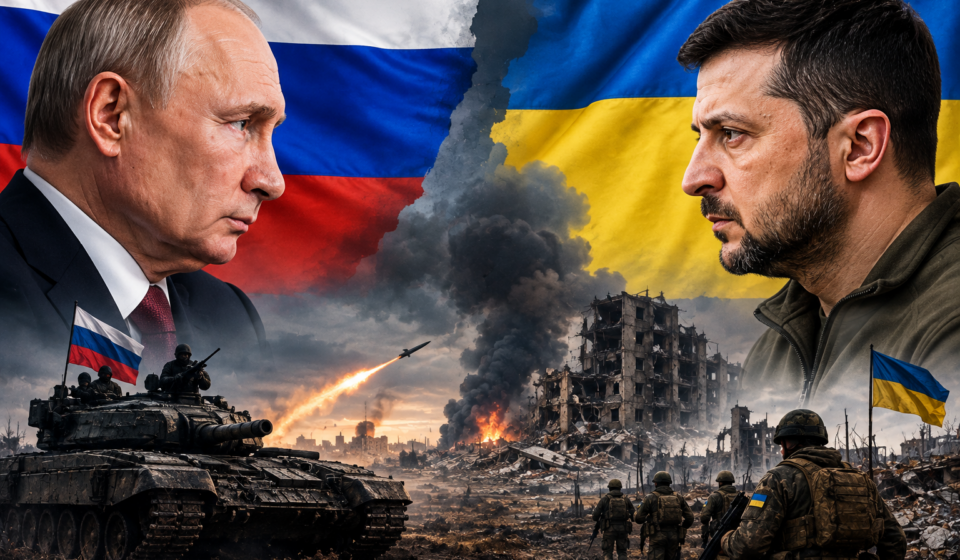
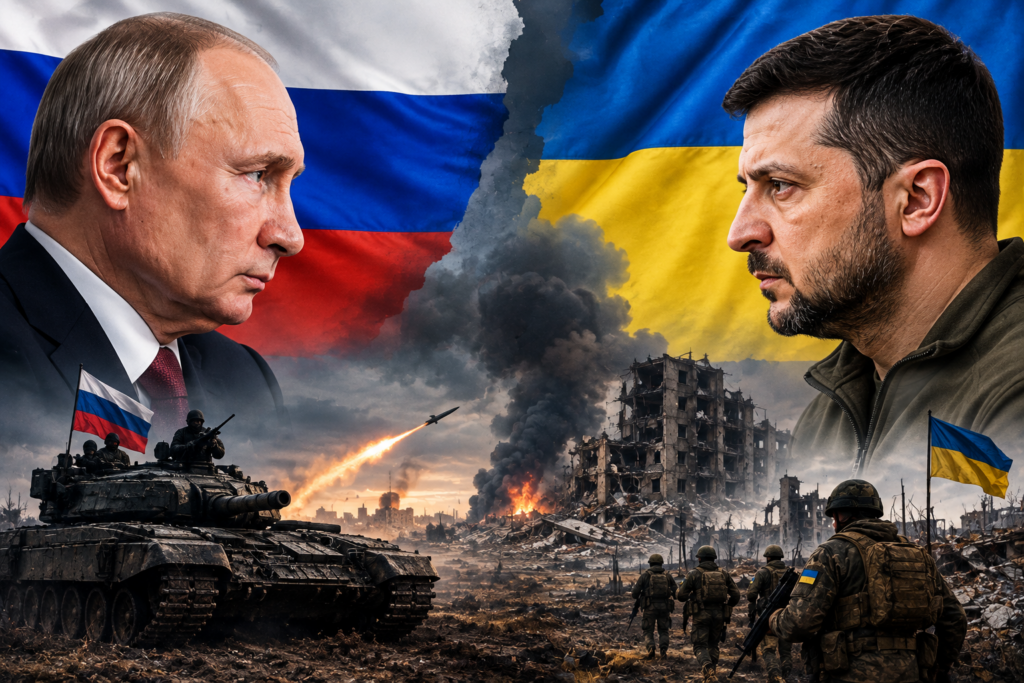
The war between Russia and Ukraine continues to take a heavy human and economic toll, with both countries carrying out increasingly frequent drone and missile attacks. More than four years after Russia launched its full-scale invasion of Ukraine, diplomatic efforts have yet to produce a lasting end to the conflict.
New Russian Strikes Hit Ukraine
Russian forces carried out overnight missile and drone attacks against several parts of Ukraine. Ukrainian officials reported strikes on industrial and infrastructure sites in the Dnipropetrovsk region, including the cities of Dnipro, Kryvyi Rih and Pavlohrad.
The attacks killed several people and injured others, while damage was reported at businesses and warehouses. An attack on an energy facility in northern Ukraine also left almost 100,000 consumers without electricity, according to Ukrainian officials.
The latest attacks demonstrate that the war is affecting not only military positions but also industrial facilities, energy systems, transportation networks and civilian communities.
Ukraine Expands Long-Range Drone Attacks
Ukraine has also increased its use of long-range drones against targets inside Russia.
Over the weekend, Ukrainian forces launched more than 1,000 drones toward Russian territory, according to Russian and Ukrainian officials cited by international media. Hundreds were reportedly directed toward the Moscow region.
Russian authorities said air defenses intercepted large numbers of drones. Damage was nevertheless reported, including at an oil refinery and a residential building in the Moscow region.
Ukraine says attacks on Russian oil, logistics and other infrastructure are intended to reduce resources available for Russia’s military campaign.
On September 22, Russian authorities also reported a Ukrainian drone attack in the Samara region that killed one person and wounded four others. Russian officials said private homes and vehicles were among those hit.
Diplomatic Efforts Continue at the United Nations
The latest escalation comes as world leaders gather in New York for the 81st United Nations General Assembly.
Ukrainian President Volodymyr Zelenskyy has arrived in New York with a series of diplomatic meetings planned. One of the most closely watched meetings is between Zelenskyy and U.S. President Donald Trump.
Ukraine is seeking international support while also discussing possible measures to reduce attacks on critical infrastructure. Reuters reported that Zelenskyy is expected to push for an energy truce, while Russia has not indicated that it is prepared to pause its aerial campaign.
The UN gathering therefore provides an important diplomatic setting, but the continuing attacks show how difficult it remains to translate diplomatic discussions into an actual ceasefire.
The Human Cost Continues
Behind the military operations are millions of people who have experienced years of war.
Civilians continue to face damaged homes, disrupted electricity supplies, displacement and uncertainty. Repeated attacks on infrastructure can also affect heating, transportation, communications and other essential services.
The conflict has also created wider economic consequences. Damage to energy facilities, oil infrastructure, ports and transport networks can affect fuel supplies, trade and prices beyond the immediate areas of fighting.
A War With No Clear End Yet
The latest developments show that neither side has stopped using long-range attacks as a major part of its strategy. Russia continues to launch missiles and drones against Ukrainian targets, while Ukraine is increasingly capable of striking deep inside Russian territory with domestically produced weapons.
At the same time, diplomatic activity continues. The presence of Ukrainian leadership at the United Nations and meetings with international leaders could create opportunities for discussions about de-escalation.
However, the continuing attacks underline the gap between diplomatic efforts and conditions on the battlefield.
For Ukraine and Russia, the immediate priority remains security. For the wider international community, the conflict continues to raise concerns about energy supplies, food security, international trade and European security.
As world leaders meet in New York, attention will remain focused on whether diplomacy can produce concrete steps toward reducing the violence. For civilians living through the conflict, however, the most important outcome would be a reduction in attacks and a path toward a durable peace.